Dr. Buffington’s Pharmacopeia
Part I: Excitatory/Inhibitory Drive

I want to make something extraordinarily clear: this is not medical advice. This is general information. Reading, liking, commenting and sharing this essay widely does NOT establish a doctor-patient relationship. Talk to your own clinician before making changes to your health. Use the exceptionally powerful information below responsibly, and at your own risk.
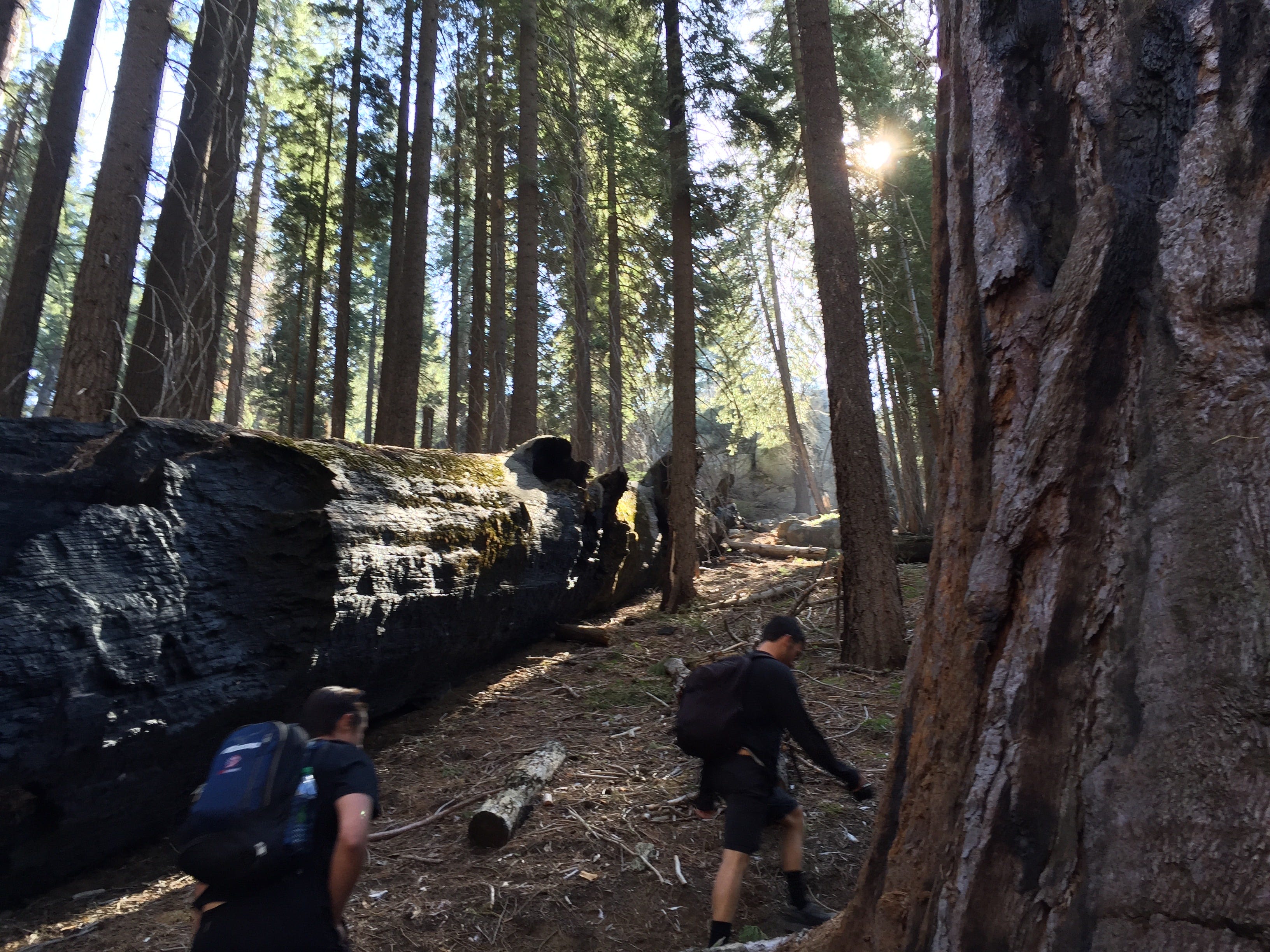
Imagine the tranquility of an old growth forest a thousand years ago. Close your eyes, listen. You hear the breath of the wind in the trees, the trickle of a stream, the cheer of birds. You feel soft covered moss under your feet. You see rays of green-hued light dappling through overhead leaves, casting dancing shadows on the forest floor.1 Yes, dangers are real, nature is metal. You’re more acquainted with death. But your day-to-day is strikingly without cell phones, Outlook, constant task switching, and Monday morning deadlines. LinkedIn won’t be invented for another millennia. It’s a lot calmer. Now think about the go-go-go of life right now: doning coffee #3 to drown your body’s REST signal. Bright flashing lights — on your TV, on your phone, at night. Your ever-evolving to-do lists. Novelty. Calendars. Clock time. We live in a glutamatergic world. The overall tone is excitatory. And the modern environment is chronically demanding excitatory adaptation. How do we restore body-mind balance? Yoga, breathwork, bare feet on tree roots, hearing the ocean, holding your lover — these help tremendously. But we can also leverage pharmacology. We can foster a physiologic milieu more supportive of balance — irrespective of our external environment. Tools that help our in-built mechanisms to continually re-find healthier set-points more in service of flourishing
Every culture historically kept a small pharmacopoeia close at hand — substances used to restore balance when the body needed a nudge back to equilibrium. Most people have now abandoned that practice. We favor daily prescriptions — and daily supplementation (which is the same model). But many of the most useful tools are still simple molecules—amino acids, minerals—that help the body return to its baseline when physiology gets pushed too far in one direction.
I’m going to show you 10-ish compounds over a two part series that I always keep on hand in my medicine cabinet. More importantly — I’ll show you why and how I use them. A specific compound for a specific purpose at a specific time — not curcumin every day because some internet guy citing some random study said it’s good for you (no hate to curcumin — its a time-tested anti-inflammatory).
Part I covers excitatory/inhibitory balance — a suite of compounds that help restore it. Part II gets into aspects of hydration you’re probably missing, what I do at first sign of a sore throat to cut symptom time in half, a framework for identifying and addressing micronutrient deficiencies, and a few other things.
I'm going to spend a few paragraphs on epistemology, philosophy, and framing before we get to the compounds. If that's not your thing — skip to the Neurotransmitter Preliminaries graphic. If you want nothing but the practical, skip to the use case list at the end.
This is a more personally active and engaged approach to supplements and medicine. It treats the body as a dynamical system, which of course it is. One containing shifting set points, feedback loops, and adaptation. We want to help the system come back to its natural baselines, to get out of stuck local minima. And so when we’re supplementing we often cycle. We take things for a specific purpose, not in perpetuity. This is much more aligned with the herbal traditions of classic chinese medicine or ayurveda whose frameworks are more native to this dynamical lens. This is not to say all of conventional medicine sees the body as static — but the basis of its understanding is formed from discrete parts that we then build up to work together rather than integrated flows as something more fundamental. Conventional western medicine is excellent at some of what it does — lab values, diagnostic frameworks → targeted intervention (extremely valuable!) but there’s a neglected world of sub-clinical episodic modulation — short term adjustments guided more by feel, by attention to your own system, interoception — that help tremendously with the day-to-day, that help create more fertile conditions for flourishing.
What this essay is not: this is not a literature review, it is not exhaustive, and it does not touch the wide and wonderful world of herbalism. In most cases, the literature I will be providing will focus more on function than outcome — how these substances work rather than controlled trials for specific diagnoses. You'll find footnotes at the end of each compound section summarizing and linking to what each paper contributes. And with one exception that I will delineate with capital letters in Part II — these compounds are incredibly safe. Without telling you what to do (because this is not medical advice) I would as a matter of principle encourage self-experimentation. You are ultimately your own physiology with your own needs and responses. Literature should guide efficacy and safety, but your response is the gold standard. Remember, we’re active participants here — not passive pill takers. These compounds are highlighted because of their strong safety profiles, and because they help the body’s capacity to find balance.
A note on epistemology and simple compounds: while there’s plenty of literature on all these molecules — there will never be large phase 3 randomized controlled trials that yield FDA-quality evidence for most of them. Is this because they don’t work? Or because they’re not safe? No — they work, and in many cases are far safer than their prescription counterparts. But they are not patentable. And thus structural forces that drive our truth seeking mechanisms will never be able to generate the funding machinery to enable that particular mode of reductive inquiry, not at that scale. This is not out of some pharma scheme to suppress them — it’s an artifact of how the machine has tumbled into its current form. But it is a reminder of the very incomplete nature of the truth seeking systems in medicine. This is fine so long as you remember that on-label FDA-approved medicines are an epistemologically valuable albeit extremely narrow slice of the healing corpus. Many forget. Others have an ideological commitment to one epistemology or the other — this is both the close-minded conventional doctor and your caricatured “natural” medicine reflexive contrarian who both embrace one slice and reject anything else, unconsciously, a priori. Fools! How sad. How intellectually embarrassing. We don’t do that here. We’re pluralists.
On to Part I:
First, some neurotransmitter preliminaries. The brain runs on a balance between excitation and inhibition. Glutamate is the primary excitatory neurotransmitter — it makes neurons fire. GABA (gamma-aminobutyric acid) is the primary inhibitory neurotransmitter — it quiets neurons. Glycine is also inhibitory, though it plays a more complex dual role we’ll get to. These systems are constantly counterbalancing each other globally and at different scales and in different regions of the brain. There’s also the NMDA receptor, which sits at the intersection — requiring both glutamate and glycine to activate — but we’ll return to that.
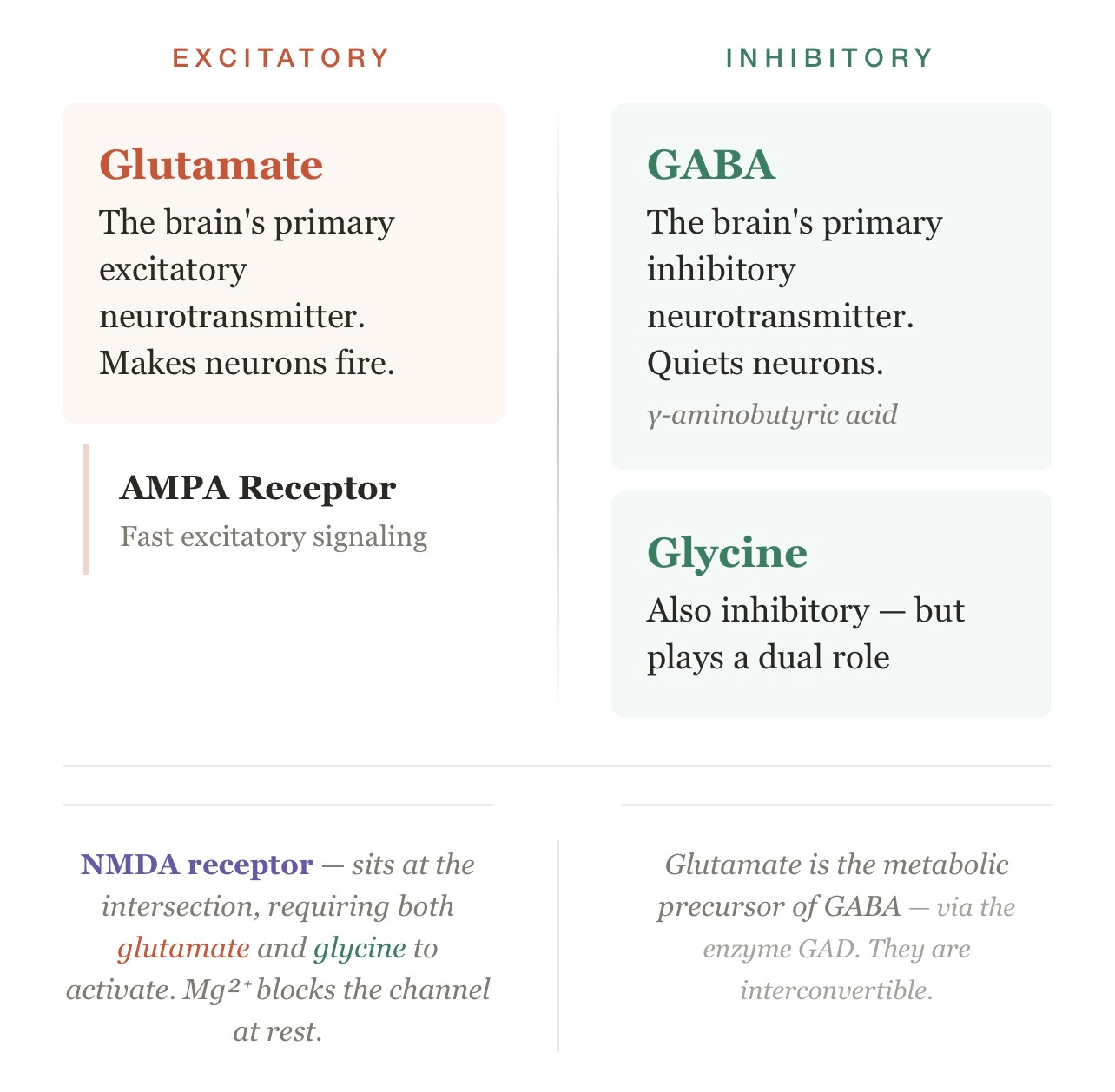
Glutamate isn’t all bad — far from. Things like learning, memory, adaptation, and synaptic plasticity all depend on glutamate, on excitatory signaling. The issue is balance. And in our modern world, the scale is tipped. So we’re focusing here on the tools that help the body restore its own inhibitory capacity — supporting the system’s ability to regulate itself. This is of course simplified — the real picture is far more layered and complex. But for our purposes, this frame will serve us well.
GABA feels gooooood. GABA is the warm worry-melting goodness you get from benzodiazepines (ie xanax) or alcohol. The problem with these two in particular is they’re uninhibited receptor sledgehammers. They work wildly well in the short term but they DON’T help with endogenous regulation, and so in addition to dependence risk (and with alcohol a flurry of toxicities), they just kick the anxiety or insomnia can down the road. Except the can is a snowball. And it gets bigger. Anxiety and insomnia get worse in the long run. So proceed there with caution.
Instead, we’re talking about substances that are softer, inherently self-regulating, don’t create dependence, meaningful receptor desensitization or upregulation — all the nasty stuff that doesn’t treat the body like we do — as a complex, dynamic system filled with set points and feedback loops. If you suffer from significant anxiety or insomnia — it’s not likely these tools will completely resolve your problems on their own. That’s not the aim. Our aim is to help cultivate a physiological environment where you’re more likely to succeed in addressing these imbalances in combination with everything else you’re doing — because it’s not just one thing, it’s everything. We’re creating fertile soil. And it’s spring, so let’s plant some seeds and boogie.
I use these inhibitory agents when I’m wired, have an especially busy work day, to balance an excitatory lever I’m pulling (eg with a second cup of coffee), to account for the shifting and disproportionately excitatory assaults of my environment, and occasionally, for sleep.
Theanine, taurine, glycine, magnesium. Three amino acids and a mineral. Below is how they work, when and why I use them. Skip to the end if you’d like a recipe-style list of common use cases and combinations.
Theanine. Theanine (i.e. L-theanine) with caffeine in a 2:1 ratio is on the first page of the nootropics 101 starter guide, and for good reason. It smooths out caffeine’s effects, takes the edge off, increases alpha wave activity in the brain (think relaxed, alert wakefulness). Many attribute the small amount of theanine in matcha for its subjectively cleaner stimulant lift compared to coffee. Theanine is unique as an anxiolytic in that it’s not sedating. Actually, it makes you sharper. And perhaps most importantly, theanine shines when excitotoxicity is in play.
How does theanine do it? A mix of tapping down the excitatory glutamate system and dialing up the inhibitory systems. Theanine is structurally analogous to glutamate, so it binds to glutamate receptors. But rather than triggering excitation, it appears to use these receptors to release inhibitory neurotransmitters from surrounding glial cells — increasing glycine substantially, and likely GABA as well. On the other side, brain glutamate levels go down. So theanine is co-opting the excitatory system to shift the balance toward inhibition. It also increases brain GABA levels through mechanisms still being understood, and upregulates BDNF. The net effect is anxiolysis (from the Greek anxius, distress, and lysis, loosening or dissolving), alpha wave promotion, and neuroprotection, but — and this is the kicker — without sedation or cognitive dulling.
Most anxiolytics operate on neurotransmitter systems like antihistamines or anticholinergics — and the sedation, the cognitive dulling, is the inherent bargain you make. This is true for the stronger tranquilizer drugs as well — the aforementioned benzodiazepines will take away your anxiety better than anything in the moment. But as we discussed, sledgehammers with serious downsides. They worsen, rather than correct, the body’s restorative capacities. And the other major pharmaceutical class — SSRIs — help meaningfully for anxiety for many in the medium-term, but these are chronic, tonic treatments that take 4-6 weeks to modulate serotonergic tone. They are not acute anxiolytics. And they too have substantial, under-appreciated side effects (this does not mean they are not useful—they are— but they are over-relied upon and limited tools).
So in acute anxiety, conventional pharmacology gives you a choice between something that works now but sedates (and may risk dependence), or something that works in six weeks. These compounds here (theanine and those to follow) occupy an under-appreciated middle ground — fast-acting, cognitively clean, safe, and working with the body’s own capacity to find equilibrium.
I buy theanine in bulk powder form and use most often in 200-500mg amounts — ~1/8th to 1/4 teaspoon. I like to include with morning caffeine, especially with a second or third cup, and with glycine before bed if it’s been an especially activating day.
Bonus: Intranasal. I love to have an intranasal formulation on hand — unique in that it’s a non-sedating anxiolytic and it’s intranasal so it’s fast onset — you don’t have to wait 30-60 minutes for digestion/absorption/onset.2 No financial ties to this company, but it is run by a dear friend who knows what he’s doing. Use case: a spray or two if I’m having trouble winding down after already laying down and trying to sleep, or as I’m driving into NYC and traffic is starting to mount, it’s a good preemptive counterbalance to what can otherwise be a nervous system tangler for me.3456
Taurine — another amino acid. Taurine supports GABAergic tone and acts as an inhibitory neuromodulator. Like theanine, it offers anxiolysis without sedation or cognitive dulling. I use it in combination with the other agents in this stack when I need to downshift.
Taurine binds directly to the GABA receptor. But unlike benzodiazapines, taurine is what we call a soft agonist (activator). This means it activates the receptor but it’s got a self-limiting ceiling of how intense a signal it can send. So you get softer GABAergic tone without the runaway potentiation. This is part of why it has a robust safety profile at supplemental doses (1-3g) — both short and long term — and no dependence. Taurine also potentiates glycine, another inhibitory pathway, as a glycine agonist.
And, like theanine, it also modulates glutamate-induced excitotoxicity, and does so through several mechanisms. This happens presynaptically, through NMDA receptor modulation, and, importantly, by modulating calcium signaling. Through this last mechanism taurine directly stabilizes overly excited tissue — like cardiac myocytes, and there’s electrophysiology data showing taurine dampens neuronal excitability in the hippocampus and hypothalamus — regions of the brain central to stress response and physiological regulation.
So while theanine acts more upstream at the glutamate receptor level and by enhancing GABAergic tone, taurine acts more directly at the inhibitory receptor level (GABA-A and glycine receptor partial/agonists) in addition to stabilization through calcium signaling (and it’s also important in brain fluid balance as an osmoregulator, and an antioxidant and it’s anti-inflammatory). So these two compounds are complementary in finding balance in a glutamatergic world. Our MBA colleagues have a word for it: SYNERGY.7891011
Use case: 1g along with coffee #2 or 3. 1-2g when I’m stressed, slammed at work, or before bed if I’m especially wired.
Glycine. Glycine is the smallest, most basic human amino acid, a building block. You’ll find it in abundant amounts in collagen, which is part of why bone broth is so calming and nourishing. If you’re a big meat eater — and eating mostly muscle meats (rich in the amino acid methionine) as most modern meat eaters do — you’re probably not getting enough collagen, and you’re likely in an unfavorable methionine-to-glycine balance. Excess methionine increases your body’s demand for glycine to clear it, so a diet heavy in muscle meat without enough collagen-rich sources depletes the very amino acid we’re trying to support here.
Glycine (3-4g before bed) has evidence for improved sleep quality, possibly enhanced growth hormone release, thermoregulatory effects — it drops core temp, which promotes falling into slow-wave sleep. Your core temperature needs to drop by ~1°F to get into deep sleep, which is part of why trying to sleep in a hot room is so miserable. Glycine facilitates that drop, which is a different sleep mechanism than sedation.
Glycine has its own inhibitory receptor, separate from GABA, a dedicated calming pathway. When glycine binds, excitability drops. These receptors were long thought to be limited to the spinal cord, but we now know they’re present throughout the brain, and they provide a background inhibitory tone, a steady calming effect, a kind of continuous damper on excitability. The anxiolytic properties of glycine are mediated through this pathway.
Glycine also plays a role on the excitatory side — it's a required co-agonist at the NMDA receptor, meaning the receptor can't open without both glutamate and glycine present. But the NMDA glycine site is largely occupied under normal conditions, so supplementing glycine doesn't meaningfully ramp up excitation. At supplemental doses, the inhibitory and sleep-promoting effects are what you feel. Beyond co-agonism at the NMDA receptor, glycine also influences how many NMDA receptors the system keeps active — regulating excitatory capacity itself. Glycine also binds and triggers neuroprotective signaling without the channel even opening — no excitatory ion flow — a conformational signal that activates cell survival pathways. In animal models of stroke, this mechanism alone reduced brain damage and improved functional recovery. Like theanine and taurine, glycine modulates in both directions — supporting excitatory signaling when the system needs it, dampening it when it doesn’t.121314151617
Glycine is the smallest amino acid, which means it’s absorbable sublingually. Rather than waiting 30 to 60 minutes for digestion and absorption, in an acute moment — trouble falling asleep, a bad anxiety spike — you can take your usual 3-4g orally and mix an additional gram in a couple milliliters of water, hold it under your tongue for 5 to 10 minutes. As another bonus, the nasal breathing this necessitates is synergistic with calm. Rapidly acting anxiolytics without dulling are incredibly rare — even rarer to be virtually side effect free. One could be true mad scientist and use intranasal theanine followed by sublingual glycine while doing controlled breathing inhaling lavender oil.18
Use case — 3-4g before bed, especially after an activating day. Pairs well with theanine for sleep. I lean on Mg/theanine/taurine more during the day, but will add 1-2g of glycine anytime i’m feeling extra-ordinarily taxed/wound up.
Magnesium — we could write a whole series on this tiny element. Bryce Hanna wrote 30 glorious pages (which I emphatically recommend if you’re a fellow nerd).19 Magnesium is an essential cofactor in hundreds of enzymes and thousands of processes, including the stabilization of ATP and, the synthesis and repair of DNA, the metabolism of glucose, and much more.
Like the aforementioned compounds, magnesium also balances inhibitory/excitatory drive. On the inhibitory side, Mg directly enhances GABA-A receptor function — binding the receptor at a site separate from GABA itself and amplifying the inhibitory signal.
On the excitatory side, Mg sits inside of NMDA receptors — effectively blocking excitatory re mate until the excitatory tone reaches a threshold. Ask yourself — in a glutamatergic world — do we want a low threshold for firing off excitatory signals throughout the brain? No, we do not. But for the majority of the population who is magnesium deficient, that’s what we get (deficiency largely due to plant/soil/nutrient degradation and food selection). Mg also stabilizes your HPA axis — your stress response system.
And when there inevitably is excitation — due to deficiency or environment — Mg is further and directly neuroprotective. When excitatory tone gets high enough to start damaging neurons — excitotoxicity — calcium flooding into the cell is part of the mechanism of damage. Magnesium competes with calcium at those entry points, stabilizing the cell under excitatory stress.
Magnesium is Mg²⁺ — a divalent cation (a +2 positively charged molecule). It needs an anion (a negative charged molecule) to form a stable salt that you can actually put in a capsule or dissolve in water. So every magnesium supplement is magnesium bound to something: glycinate (glycine), chloride, threonate (threonic acid), malate (malic acid), taurate (taurine), citrate, oxide, etc.20212223
I make sure to use magnesium in multiple forms, because magnesium has different dynamics / different tissue uptake depending on what it’s bound to. Remember all that talk about glycine? That’s part of why you often hear magnesium glycinate as the recommended form before bed — you’re getting magnesium plus glycine (albeit in tiny amounts). I also like having magnesium chloride on hand, and toss 100 mg (~¼ tsp) into a liter of water a few times a day. I think Magnesium threonante is overpriced and not as unique as those selling you the supplements advertise. Citrate is great if you could use more bowel regularity (high doses its a laxative) — though it’s perhaps even easier to get a flush with MgCl. As such, start low as your stomach adapts. Mg Glycinate has some of the best GI tolerance, and along with MgCl, my daily workhorse. I also love magnesium malate (malic acid provides mitochondrial support).24 Magnesium oxide sucks — poor bioavailability, avoid.
So we have four compounds above that help balance excitation / inhibition. They’re simple molecules, safe, and increasingly in our world, needed. They help with balance. Allostasis. In addition to calming your nervous system, they protect your brain. Their side effects are a more regulated biological system. That sounds like a good trade. It is.
A harm reduction note: while we have limited data, these molecules make a good case to be included with any excitatory recreational substance use — think stimulants (from amphetamines to cocaine to MDMA) and even coffee. These are all cytoprotectants, compounds that protect cells and tissues from damage under stress. While I’m not promoting any illicit substance use — humans are gonna do drugs, that’s a fact of history, that’s a fact of humans, and the cost benefit case if you are favors having all of these on board to help dampen neurotoxic effects.
Pharmacologic Use Cases:
Morning coffee. Theanine 250mg, 2:1 ratio with caffeine. 1/8 to 1/4 teaspoon in the cup.
Coffee #2 or #3. Theanine 250-500mg, taurine 1g. Up to 2g taurine if I’m already running hot. Glycine only if I’m really taxed.
Before bed, normal night. Magnesium glycinate 300-400mg, otherwise mothing typically, but glycine 3-4g if needed. Maybe theanine if the day was activating. Note: I don’t typically have trouble sleeping.
Before bed, wired. Glycine 4g, theanine 250-500mg, taurine 1-2g, magnesium glycinate 300-400mg minimum.
Already in bed, can’t fall asleep. Intranasal theanine. Sublingual glycine — 1g in a couple mL of water, under the tongue for 5-10 minutes. Breathwork.
Driving into NYC, hitting traffic. Intranasal theanine. Easier than powders on the go.
Post-wedding, slammed reception espressos, wired as fuck, need to sleep. Glycine 8g, theanine 500-1000mg, taurine 2-3g, as much magnesium as my stomach can handle.
Throughout the day. A quarter teaspoon of magnesium chloride (~120mg) in a liter of water a couple times a day.
Especially taxed body and nervous system. All of the above + epsom salt soak.
Part II will look at underlying aspects of hydration you’re probably missing, as well as what I do at the first sign of a sore throat to cut symptom time in half, a framework and approach for nutrient deficiency, and a few bonus substances I love. Stay tuned, and may balance be with you.
A few notes on sourcing:
For simple compounds like amino acids, I often use NOW brand. They’re a large manufacturer with strong in-house quality control and a solid reputation for basic, single-ingredient products. They are not the gold standard for quality, but for straightforward compounds, they’re a very reasonable choice relative to cost.
Supplement brands with gold-standard quality control include Pure Encapsulations and Thorne. I use Pure Encapsulations Mg glycinate. For magnesium chloride specifically, look for food-grade options — I use the brand Pure on Amazon, but be careful there. Fake products do pop up. Best to buy from the manufacturer directly, even the manufacturer’s Amazon page.
Disclosure: I have no financial relationship with any of these companies company or conflicts of interest to state.
Reminder: this is not medical advice. Talk to your clinician before making changes.
The Japanese have a word for this (of course they do): Komorebi 木漏れ日, literally, “sunlight leaking through trees,” which captures this experience in a way no English word does.
First-pass metabolism: when you swallow something, it’s absorbed through the intestinal tract and first passes through the liver before entering systemic circulation. The liver metabolizes a portion of the bioactive compound en route — which is why oral onset typically takes 30 to 90 minutes. Intranasal and sublingual routes bypass this process, delivering compounds directly into circulation and across the blood-brain barrier — onset in seconds to minutes. First pass metabolism protects you from ingested toxins and modulates drug exposure — but when you need something to work now, it’s in the way.Pharmacologically, we view first-pass metabolism as a wonderful servant but a terrible master.
Review of theanine’s CNS effects — anxiolysis via inhibitory neurotransmitter upregulation, BDNF increase, alpha wave promotion, and neuroprotection without sedation. Lardner AL, Nutritional Neuroscience, 2014. PubMed
Comprehensive review of theanine’s biosynthesis, bioactivities, and mechanisms including neuroprotection, anxiolysis, and immune modulation. Le J et al., Food Chemistry, 2025. ScienceDirect
In vivo microdialysis showing theanine increased striatal glycine without increasing excitatory neurotransmitters, mediated through AMPA/kainate receptor modulation of glial release. Yamada T et al., Amino Acids, 2009. PubMed
Theanine prevented long-term anxiety, anhedonia, and cognitive deficits from adolescent THC exposure, blocking molecular abnormalities in mesocorticolimbic and prefrontal GABAergic circuitry. De Felice M et al., Journal of Neuroscience, 2021. PubMed
At physiological concentrations, taurine potently activates extrasynaptic GABA-A receptors (α4β2δ subtype) in the thalamus, producing tonic inhibition that reduces neuronal excitability and firing frequency — the foundational paper establishing taurine as an endogenous regulator of thalamic network activity. Jia F et al., Journal of Neuroscience, 2008. PubMed
Comprehensive review of taurine and homotaurine as GABA-A receptor agonists, demonstrating subunit-dependent activity — full agonism at δ-containing (extrasynaptic) receptors, partial agonism at γ-containing (synaptic) receptors — with therapeutic implications for neurodegeneration and neuroinflammation. Meera P et al., Frontiers in Pharmacology, 2023. PubMed
Taurine protects against glutamate excitotoxicity by inhibiting calcium influx through L-, P/Q-, and N-type voltage-gated calcium channels and NMDA receptor channels, primarily by preventing glutamate-induced membrane depolarization. Wu H et al., Brain Research, 2005. PubMed
Review of the molecular mechanisms underlying taurine’s neuroprotection against glutamate-induced injury — spanning prevention of excitotoxicity, calcium overload, mitochondrial energy failure, calpain activation, and apoptotic cascades. Ye HB et al., Canadian Journal of Neurological Sciences, 2013. PubMed
Broad review of taurine’s dual role in brain volume regulation (osmoregulation) and inhibitory neuromodulation via GABA and glycine receptors, with discussion of the still-open question of specific taurine receptors. Oja SS, Saransaari P, Advances in Experimental Medicine and Biology, 2017. PubMed
Glycine promotes sleep through NMDA receptor activation in the suprachiasmatic nucleus, triggering peripheral vasodilation and core body temperature drop — the mechanistic paper showing how 3g glycine before bed facilitates the thermoregulatory prerequisite for sleep onset. Kawai N et al., Neuropsychopharmacology, 2015. PubMed
Glycine supplementation in sleep-restricted volunteers improved subjective daytime performance, reduced fatigue, and shortened sleep latency — the clinical companion to the mechanistic work above. Bannai M et al., Frontiers in Neurology, 2012. PubMed
Landmark paper demonstrating that glycine binding alone — without channel opening — primes NMDA receptors for clathrin-dependent internalization, effectively regulating the number of excitatory receptors available at the surface. Nong Y et al., Nature, 2003. PubMed
Glycine activates neuroprotective signaling through NMDA receptors independent of ion flow — reducing infarct volume and improving functional recovery in animal stroke models even when receptor channels and glycine receptors are blocked. Chen J et al., Scientific Reports, 2017. PubMed
Glycine induces bidirectional plasticity of NMDA receptor responses in a dose-dependent manner — at higher concentrations, the net effect favors inhibition through receptor internalization, supporting glycine’s role as a self-regulating modulator of excitatory capacity. Zhang XY et al., Journal of Biological Chemistry, 2014. PubMed
Glycine supplementation extends lifespan in animal models, likely through GNMT-mediated clearance of excess methionine — relevant for modern diets disproportionately high in muscle meat relative to collagen-rich sources. Johnson AA & Cuellar TL, Ageing Research Reviews, 2023. PubMed
Lavender oil (as Silexan, a standardized oral preparation, 80-160mg/day) has remarkably strong clinical evidence relative to lay-awareness — multiple double-blind RCTs across over 1,200 patients showing anxiolytic efficacy comparable to a low-dose SSRI (paroxetine 20mg) and benzodiazepine (lorazepam 0.5mg), with adverse event rates comparable to placebo. No sedation, no dependence, no withdrawal. The mechanism is voltage-gated calcium channel inhibition, reducing presynaptic glutamate release — a modulator of excitatory tone, much like the compounds mentioned in this piece. Inhaled lavender has less rigorous evidence, but a solid Hedges' g of -0.73 — a medium-to-large effect size. The active compound linalool — also the active smell in roses — gets to limbic structures in the brain directly via the olfactory nerve , bypassing the blood-brain barrier entirely. An argument to quite literally stop and smell the roses, particularly if you're feeling anxious.
For the nerds who want to understand what makes magnesium, of all the elements, so unique and so well suited to such a wide range of biological roles. Link here
The foundational paper establishing that Mg²⁺ physically occludes NMDA receptor channels in a voltage-dependent manner — blocking excitatory calcium and sodium influx at resting potential and only relieving the block upon sufficient depolarization. The paper that made magnesium central to our understanding of excitatory neurotransmission. Nowak L et al., Nature, 1984. PubMed
At physiologically relevant concentrations (0.1-1mM), magnesium potentiates GABA-A receptor function by 20-40% across multiple subunit combinations, binding at a site distinct from GABA itself — the direct evidence for the claim that Mg enhances inhibitory tone through the GABA system independent of its NMDA effects. Möykkynen T et al., Neuroreport, 2001. PubMed
Magnesium’s anxiolytic effects are antagonized by flumazenil (a benzodiazepine receptor antagonist) and potentiated by subthreshold benzodiazepine doses — demonstrating that Mg-induced anxiolysis is mediated through the benzodiazepine/GABA-A receptor complex, not solely through NMDA blockade. Poleszak E, Pharmacological Reports, 2008. PubMed
New structural work resolving how Mg²⁺ interacts with NMDA receptors at the atomic level — still an active, evolving area of research four decades after Nowak. Huang X et al., Neuron, 2025. PubMed
Malic acid mechanism: Malic acid provides mitochondrial support primarily through facilitating NADH transport into mitochondria via the malate-aspartate shuttle and serving as a key TCA cycle intermediate that enhances electron transport chain function and ATP production.
Super helpful breakdown. Thanks for the download, doc 🙏
Awesome